


New Lovecraft Goodies
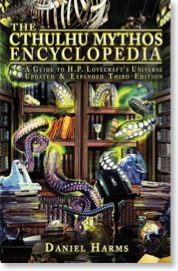
The Cthulhu Mythos Encyclopedia is published by Elder Signs Press. This is the third edition of the book. It’s a wonderful reference for all major things Lovecraftian. Daniel Harms has done an incredible amount of research into the Cthulhu Mythos stories, evident by the thorough articles and extensive cross referencing. I initially heard about this book from the excellent interview with Harms on the Yog Radio podcast. Check it out if you have some time.
The best book that I can compare it to in terms of effectiveness is the very thorough Malleus Monstrorum from Chaosium, but the Encyclopedia covers all aspects of the Cthulhu Mythos, not just monsters.
One of the drawing points of the Lovecraft stories is that, in the best tradition of horror stories, more is obscured rather than revealed. However sometimes you really need a little clarification and the Encyclopedia provides everything you need. It is already a valuable reference for me for reading and gaming.
The only thing I miss is a concordance, but that is mitigated by the fact that the articles do provide some references to other articles. It would also increase the number of pages by quite a bit, but a PDF on the website would be a nice compromise.
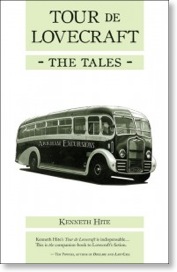
Tour de Lovecraft - The Tales is published by Atomic Overmind Press. Ken Hite has written many valuable supplements in the gaming industry. My personal favourites are his GURPS Horror supplement and the Trail of Cthulhu sourcebook. GURPS Horror is an excellent introduction to the mechanics of what makes a horror story or scenario work, and provides a clear toolkit for how to write and analyse horror. Trail of Cthulhu is an excellent adaption of the GUMSHOE system into the Call of Cthulhu universe. Hite clearly knows horror and knows the Mythos.
In Tour de Lovecraft Hite shows similar skill at interpreting each of Lovecraft’s stories. They are arranged chronologically by story, each entry being a small essay on something interesting about the story and how it ties to major threads and themes that Lovecraft used. I’ve already re-read a couple of Lovecraft’s stories, following each of them up with a reading from Hite’s book. The result is a much deeper appreciation and enjoyment of what Lovecraft was trying to express.
There is also an excellent short introduction describing the major forces and people influencing our understanding of Lovecraft’s literature, as well as a list of the seventeen tales that Hite considers from “Great” to “Absolutely Perfect”. I haven’t read them all, but so far I haven’t had any major disagreements with his list.
These two books make a wonderful addition to any Lovecraft aficionado’s library. I highly recommend them.